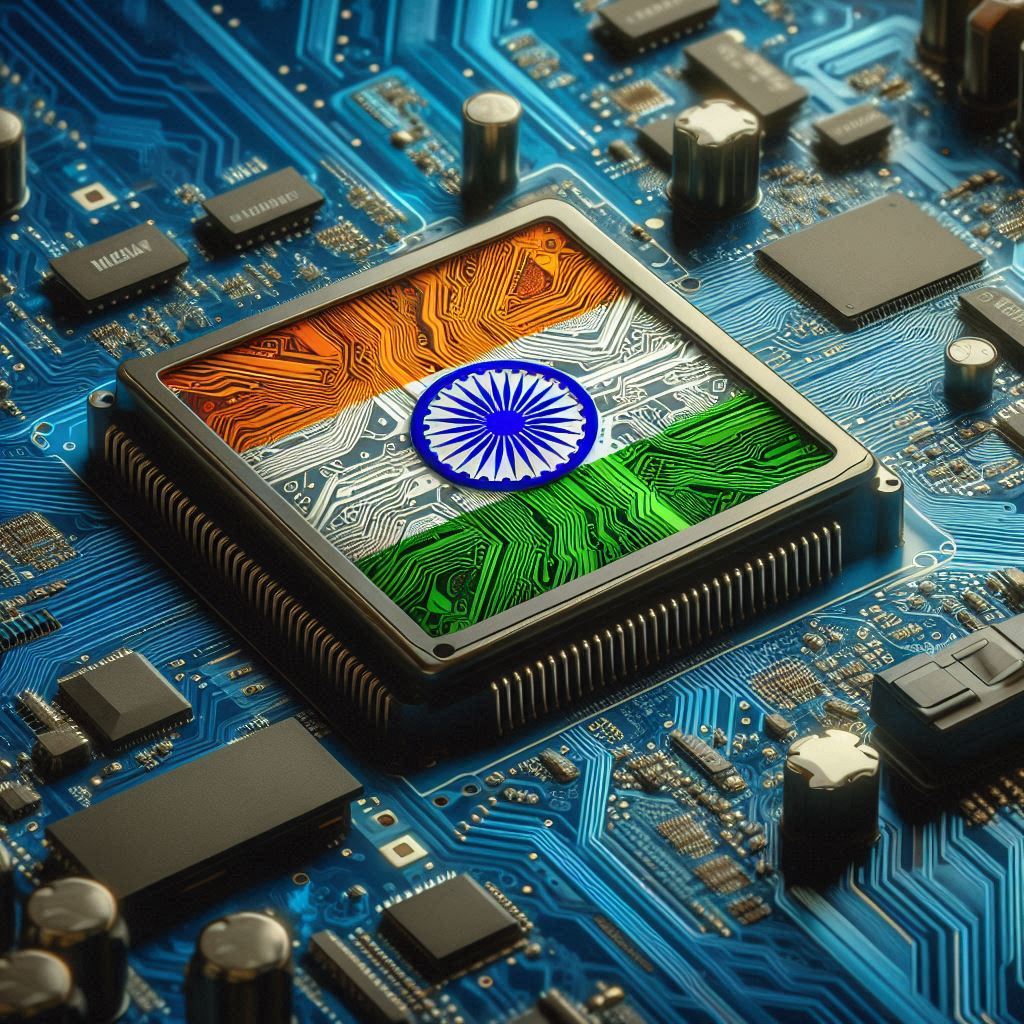
India Semiconductor Mission (ISM): Launched with a budget of ₹76,000 crore ($10 billion), ISM is the backbone of India’s semiconductor strategy. It provides financial incentives for setting up fabs, ATMP (Assembly, Testing, Marking, and Packaging) units, and design facilities.
- Production Linked Incentive (PLI) Scheme: Offers up to 50% fiscal support for semiconductor manufacturing projects, making India globally competitive.
- Strategic Partnerships: India has signed MoUs and strategic tech partnerships with countries like the US, Japan, and Taiwan to strengthen its semiconductor ecosystem.
Here some global companies are manufacturing in partnership with Indian companies.
A key player in India’s industrial landscape, is developing a full-fledged semiconductor fabrication unit.Tata Electronics’ semiconductor fabrication plant in Dholera, Gujarat, follows a structured timeline from announcement in 2024 to full-scale production by 2026, with key milestones in infrastructure, equipment installation, and workforce development.
Announcement at Vibrant Gujarat Summit: Tata Electronics officially announces plans to build India’s first major semiconductor fab in Dholera.
Tata Electronics Dholera Semiconductor Plant: Project Timeline (2024–2028):
Jan 2024 announcement at Vibrant Gujarat Summit: Tata Electronics officially announces plans to build India’s first major semiconductor fab in Dholera.
Mar–Jun 2024 cabinet approval & land allocation: Government of India approves the project under the Semicon India Programme; land allocated in Dholera Special Investment Region (DSIR).
Q3 2024 -Groundbreaking Ceremony: Prime minister narendra modi virtually inaugurates the dholera and assam semiconductor projects.
Late 2024–2025 – Infrastructure development: Construction of clean rooms, utilities, and residential units for employees begins.
Mid 2025 -Equipment Installation: advanced chip-making tools and AI-integrated factory systems begin arriving from global suppliers.
Late 2025 – Technology Integration: Powerchip Semiconductor Manufacturing Corporation (PSMC) of Taiwan begins tech transfer and operational setup.
Q2 2026 -Pilot Production: Internal test runs of 28nm and above chips for automotive and consumer electronics sectors.
Dec 2026 -Commercial Production Launch: Full-scale manufacturing of up to 50,000 wafers per month begins. |
2027–2028 -Capacity Expansion & Export Scaling: Tata plans to scale output and integrate with global supply chain.
What will be made in this fabrication system?
Hare will be made:Processors used in mobile phones, camera sensors, chips used in TVs, and wireless communication systems in the AI and automotive sector .
Investment: ₹91,000 crore ($11 billion)Jobs creats :Over 11,000 -20,000 direct and indirect skilled positions.Commercial production expected by December 2026.
Border economic benifits:This is important because it creates jobs in India and puts India in a strong position in the global chip manufacturing industry.It will also help India to reduce imports.
Micron Technology:
Why Micron is important to India?
To increase India’s chip manufacturing and supply. Also to reduce India’s dependence on East Asia.
Sahasra Semiconductors:
It is India’s first semiconductor company There is an assambly testing manufacturing and packaging (ATMP) facility.headquartered in Noida, Uttar Pradesh. This semiconductor hub is built in Bhiwadi, Rajasthan.
PCB Manufacturing: Sahasra is also a leading manufacturer of printed circuit boards, serving sectors like automotive, telecom, and consumer electronics.
Make in India Champion: The company is aligned with India’s goal of becoming a global semiconductor hub by 2030.